Let's be honest about this. A five-hour car journey with a toddler is not a fun outing. It is a logistical challenge with unpredictable variables, limited options for course correction, and no exit strategy once you're on the motorway. Anyone who tells you it's easy either doesn't have kids or has blocked the memory out entirely.
That said, it is absolutely survivable. With the right preparation the night before and a realistic mindset on the day, you can get through it in one piece. Here is what actually helps.
The Night Before: Do the Work Then, Not in the Morning
The single biggest mistake parents make is leaving preparation for the morning of the journey. When you're trying to load the car, locate the snacks, charge the tablet, find the sick bags and keep your toddler from having a meltdown at 5am, everything takes three times as long as it should. Do it all the evening before.
Pack the car boot. Lay out the car snack bag. Charge the tablet fully. Download the shows or films your toddler wants to watch. Make sure the car seat organiser is stocked and ready to go. If you're leaving early, prepare a change of clothes in an accessible bag, not buried under the suitcases.
When morning comes, you want to be able to put a half-asleep toddler in the car seat and just go.
Timing: Work With Their Body Clock, Not Against It
This is the most powerful thing you can do. A toddler who is asleep covers distance without complaint. Work backwards from that fact.
- Leaving at 5am or 5:30am often means your toddler dozes off within the first hour, giving you a peaceful first stretch of motorway.
- If an early start isn't possible, try to leave at the start of their usual nap time.
- Avoid the mid-afternoon window when toddlers are typically at peak energy and frustration.
A journey that starts with a two-hour nap is a different beast entirely to one that starts with an awake, rested, curious toddler ready to ask "are we nearly there yet" for the next 300 miles.
The Snack Strategy
Snacks are not just food on a toddler car journey. They are a time-management tool. The key is to ration them deliberately rather than handing everything over in the first hour.
Pack snacks in small, individual portions so you can hand them out one at a time. A portion of raisins, then a few breadsticks, then some cheese, then a rice cake. Space them out. Stretch the novelty. A new snack every 20 to 30 minutes buys you more peaceful motorway than almost anything else.
Avoid anything too messy, sticky, or likely to cause a crisis if dropped. Grapes (halved for under-4s), raisins, breadsticks, and mini cheddars are all good options. Save the special treats for the difficult stretches.
💡 Parent tip: Keep snacks in the car seat organiser within your toddler's reach rather than in the front. Toddlers who can see what they want but can't reach it become frustrated quickly. Toddlers who can access a snack pocket themselves feel independent and stay calmer. The CheekyBoo organiser has pockets at exactly the right height for this.
Activity Rotation: The One Hour Rule
No single activity will hold a toddler's attention for five hours. Do not expect it to. Instead, rotate activities roughly every 45 minutes to an hour.
A loose order that works for many parents:
- Books or audiobook (first stretch, when they're fresh)
- Tablet time (mid-journey when you need the big guns)
- Window games, cloud-spotting, counting lorries (after a rest stop)
- New small toy or activity pack (kept as a surprise for the difficult final stretch)
The golden rule: do not use the tablet in the first 20 minutes. Save it. Once the tablet is out and then taken away, you've created a much harder problem to manage.
Handling Meltdowns: Real Talk
Toddlers melt down. It happens on long journeys and there is no trick that prevents it entirely. What you can do is reduce the frequency and manage it better when it happens.
Stay calm. Your toddler will pick up on your stress and amplify it. If you can remain steady, the meltdown usually passes faster than if you're also getting wound up. Pull over if you need to. A five-minute stop is better than trying to manage a screaming toddler at motorway speed.
Have a reset plan. A drink of water, a change of snack, a different activity, or a quick song often breaks the cycle. Build in enough margin in your journey time that stopping is not catastrophic.
CheekyBoo Car Seat Organiser
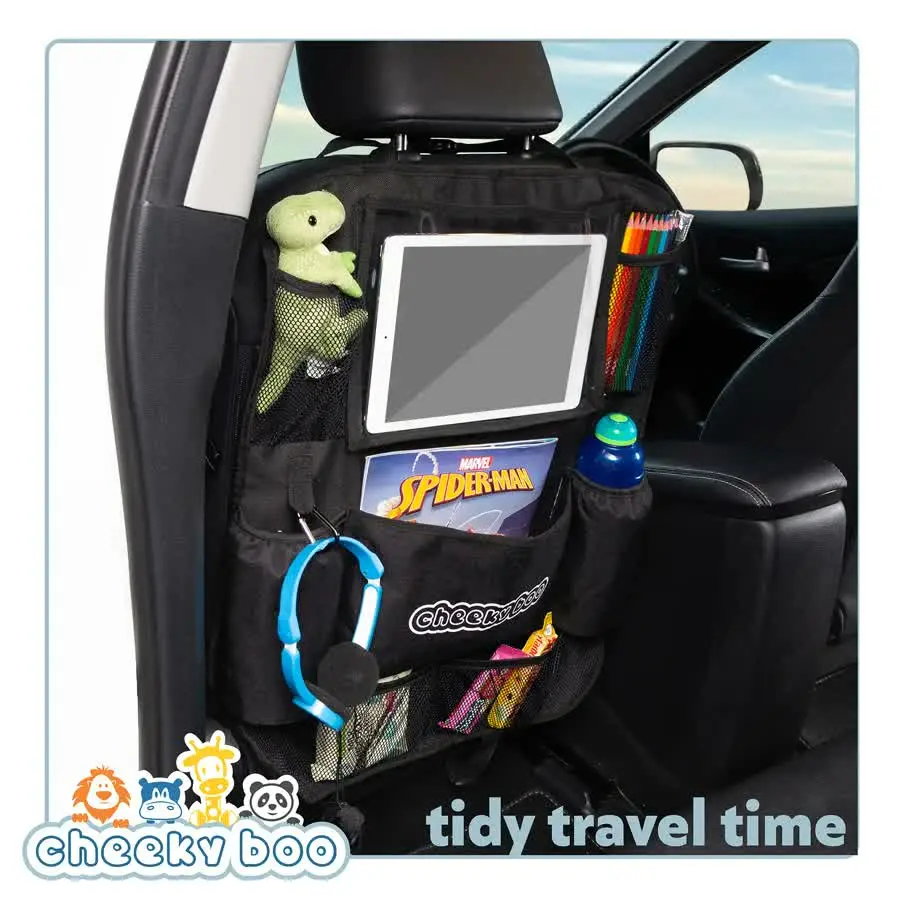
Keeps snacks, the tablet, drinks and activities within your toddler's reach so you're not passing things back while driving. 8 pockets, wipe-clean material, fits all cars. Over 822 reviews from UK parents.
Shop on Amazon UK →The Gear That Actually Helps
You don't need to spend a lot to make a long journey more manageable. A few things that consistently make the difference:
- A car seat organiser that keeps everything within your toddler's reach, so you're not passing things back from the front while driving
- Headphones sized for toddlers so tablet audio doesn't fill the whole car
- A small activity bag kept in the footwell with a few novelty items they haven't seen before
- Sick bags tucked into easy reach (more on this in our guide to car sickness prevention)
- A change of clothes accessible without unpacking the boot
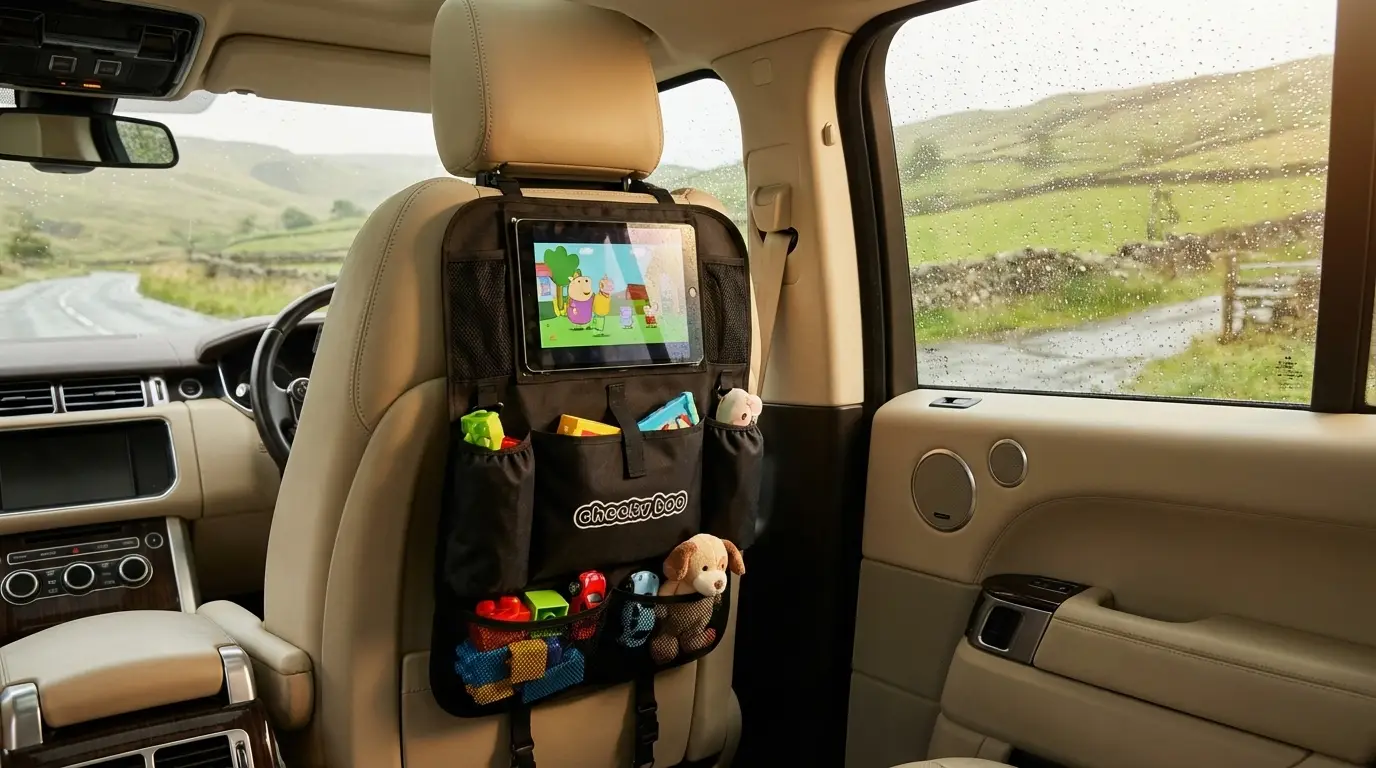
The CheekyBoo Car Seat Organiser earns its keep on exactly these journeys. The tablet pocket holds an iPad or Fire tablet at the right angle for viewing. The snack and drinks pockets put everything within reach. And because your toddler can self-serve, you're not leaning back every ten minutes at 70mph.