If your child gets car sick, you'll know the particular dread of a long family journey. The combination of a queasy child, no easy escape route, and the certain knowledge that things are about to get messy is one of the less glamorous parts of parenting. The good news is that car sickness is well understood and very manageable once you know what causes it and what actually helps.
What Causes Car Sickness in Children?
Car sickness is a form of motion sickness, and it happens because of a mismatch between what the eyes see and what the inner ear feels. When a child is sitting in the back of a moving car, their inner ear detects motion but their eyes may be focused on something stationary, like a book, a screen, or the seat back in front of them.
The brain receives conflicting signals and, not knowing what to make of it, responds with nausea. It's an evolutionary response that developed long before cars existed, essentially a warning that something was wrong with the body's spatial awareness.
Children are more susceptible than adults because the vestibular system (the balance and spatial awareness system in the inner ear) is still developing. Most children grow out of it, but during the ages of 3 to 8 it can be a regular feature of family travel.
Prevention: What Actually Works
Seat Position Matters
The best seat for a child prone to car sickness is the middle rear seat, where they have a clear view of the road ahead. Being able to look forward rather than sideways helps the eyes and inner ear agree on what is happening. If the middle seat isn't an option, position your child so they can look out of the front windscreen rather than a side window.
Fresh Air Helps More Than You'd Think
Stuffy cars are worse for car sickness. Keep a window slightly open if possible, or use the air conditioning on a fresh setting rather than recycled air. The cool air on the face can help settle nausea once it starts. If your child starts to feel sick, opening the window is one of the first things to try before pulling over.
The Screen Angle Problem
Tablets and screens in the car are a double-edged thing for children prone to car sickness. They can be a helpful distraction, but only if positioned correctly. A screen held flat on the lap, or tilted at an awkward angle, is actually more likely to trigger nausea than no screen at all. The flat-on-lap position means the child's eyes are looking down at something stationary while the inner ear detects motion, creating exactly the kind of sensory conflict that causes the problem.
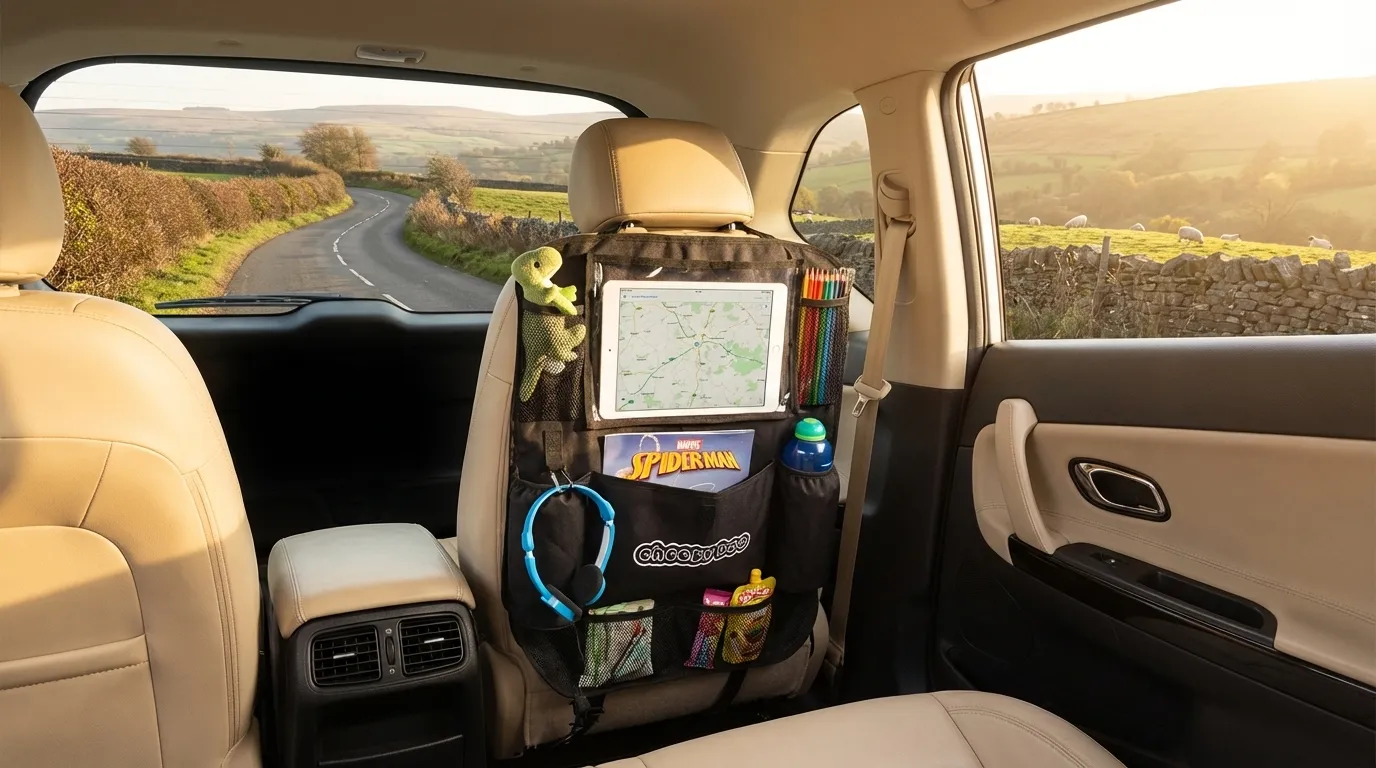
A screen positioned upright, at roughly eye level and close to the angle of looking out of the window, is much less problematic. This is one of the reasons a proper car seat organiser with a forward-facing, upright tablet pocket makes a practical difference. The CheekyBoo organiser's tablet pocket holds the screen upright and at a natural viewing angle, rather than flat on the lap where it's most likely to cause issues.
💡 Important note on screens: A tablet held flat on the lap is one of the most common triggers for car sickness in children who are already prone to it. Position the screen upright, at roughly the same angle as a car window, and this risk reduces significantly. The CheekyBoo organiser's tablet pocket holds screens at exactly this angle.
Ginger: The Old Remedy That Works
Ginger has good evidence behind it as a natural remedy for nausea. Ginger biscuits, ginger chews, or ginger capsules (for older children) can help reduce the severity of car sickness, particularly if taken around 30 minutes before departure. Some children respond very well to ginger and parents of car-sick kids swear by it. It won't prevent severe motion sickness entirely but it takes the edge off.
Avoid Heavy Meals Before Long Journeys
A full stomach makes car sickness worse. Aim for a light meal or snack rather than a big lunch before a long drive. Similarly, spicy or greasy food increases the likelihood of nausea. On the day of a long journey, keep food light and simple.
What to Pack: The Car Sickness Kit
Even with all the prevention strategies in place, you should still travel prepared. Car sickness can happen regardless, and being ready makes the whole experience much less traumatic for everyone.
- Sick bags, several, within easy reach of the child's seat
- A full change of clothes per child in an accessible bag (not buried in the boot)
- Wet wipes and a small towel
- A plastic bag for soiled clothing
- Ginger chews or ginger biscuits
- A small bottle of water and plain crackers for after an episode
- An antihistamine tablet if your GP or pharmacist has recommended one (see FAQ below)
The sick bags and wipes should be in the car seat organiser pocket, not in the boot. If you need them, you need them immediately.
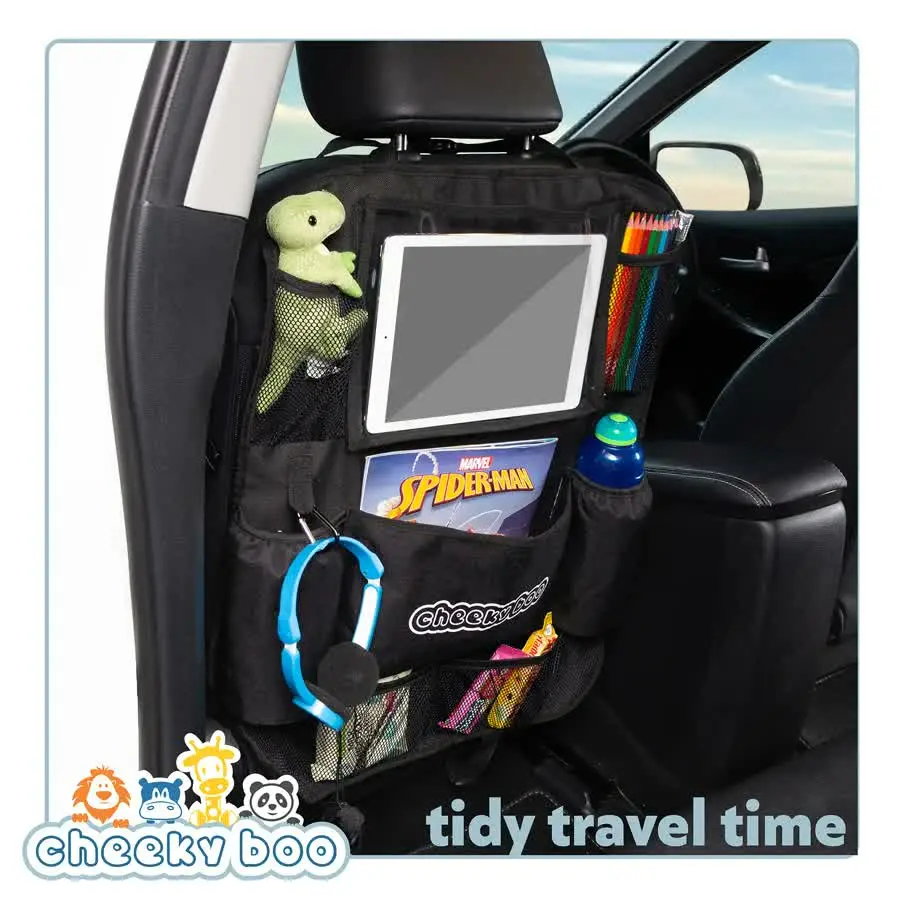
CheekyBoo Car Seat Organiser
The upright tablet pocket holds screens at the correct viewing angle to reduce motion sickness risk. Keeps sick bags, wipes and essentials within reach. Fits all cars, 8 pockets, wipe-clean material.
Shop on Amazon UK →When to See a Doctor
Most childhood car sickness is normal and self-limiting. However, if your child's nausea starts happening in situations other than moving vehicles, if it's accompanied by other symptoms like headaches or vision changes, or if it's severe enough to be genuinely distressing, speak to your GP. In most cases they'll reassure you, but it's worth ruling out anything else.
For regular car sickness that doesn't respond to the prevention strategies above, ask your GP or pharmacist about appropriate medications for your child's age. There are options that work well and are widely used safely.