Six weeks. It sounds like plenty of time when school breaks up in mid-July. By week two, if you haven't planned ahead, you'll be staring out of the window wondering how you're going to fill the remaining month without everyone going completely stir-crazy.
The families who genuinely enjoy the summer holidays tend to plan them like a campaign. Not every day mapped out to the minute, but a loose structure that gives you something to look forward to each week and stops the whole thing collapsing into an expensive mess of last-minute decisions and full car parks.
Here is how to approach the six-week summer holiday as a road trip planner, week by week.
Before You Start: The Three Planning Principles
Before you look at a map, agree on these three things with your family.
- Build in rest weeks. Not every week needs to be an adventure. A week at home between trips means everyone recovers and actually enjoys the next one.
- Book the big things early. Popular campsites, cottages and holiday parks in Cornwall, Norfolk and the Lake District fill months in advance. If you want the good options, decide now and book this week.
- Start close, go further. Week one is not the time for a 400-mile drive. Build distance and ambition as the holiday progresses.
Week 1: Local Exploring
The first week of the school holidays is often chaotic. Kids are overtired from the end of term, you're probably finishing work, and everyone needs to decompress before they're actually ready to enjoy anything.
Keep week one local. Day trips rather than overnight stays. Beaches, National Trust properties, forest parks, or a city you've always meant to explore properly. Nothing that requires more than 90 minutes of driving. This week is about settling into holiday mode, not heroics.
Week 2: Your First Proper Trip Away
By week two, everyone is ready. This is the right week for your first multi-night trip. Somewhere within two to three hours of home, so the drive is manageable and you're not spending half of Sunday recovering from the journey.
Good options for UK families: the Jurassic Coast, Peak District, Yorkshire Dales, Snowdonia, the Cotswolds, or anywhere you have a natural draw. Book a self-catering cottage or holiday park with an outdoor pool. Three to four nights is the sweet spot.
Week 3: Mid-Holiday, Keep the Novelty Alive
This is the week that often goes flat if you're not careful. The novelty of the holidays has worn off slightly, everyone is comfortable being off school but the excitement of the early weeks has faded.
Two tactics work well here. First, do something the children have specifically asked for, even if it's not your preference. A theme park, a waterpark, a specific animal encounter. Giving them a genuine choice of activity creates excitement that a parent-chosen destination rarely achieves.
Second, save a smaller surprise for week three. A new book, a new car activity pack, a treat stop at a particularly good motorway services. Small novelties reset the mood.
🗺️ Planning tip: Keep a running list of destination ideas throughout the year and share it with your kids in spring. Let them vote on the top three. You'll get far more buy-in on the day when they feel involved in the decision. Children who have chosen a destination are remarkably patient in the car on the way there.
Week 4: The Big Trip
If you're doing one longer journey this summer, week four is the time for it. You've built up to it, everyone knows the rhythm of travel now, and there are still two weeks left to recover.
For a longer trip of four hours or more, preparation matters more than on the shorter runs. Pack the car the night before. Download content on the tablets. Stock the organiser with snacks and activities. Plan your service station stops in advance so you're not scrambling.
Long destinations worth the drive: Cornwall, the Scottish Highlands, Northumberland, the Pembrokeshire Coast, or a ferry crossing to Ireland or France if you're feeling ambitious.
Car Prep for the Longer Runs
Whatever week you're travelling, the car experience makes or breaks a family road trip. A well-prepared car means calmer children and a calmer driver.
- Charge tablets fully the night before, download content offline
- Stock the car seat organiser with snacks, drinks and activities before you leave
- Keep a car bin in the back footwell to collect wrappers
- Have sick bags accessible, not buried in the boot
- A small activity bag with a few items they haven't seen yet
- Phone mounted properly for navigation, not balanced on the dashboard
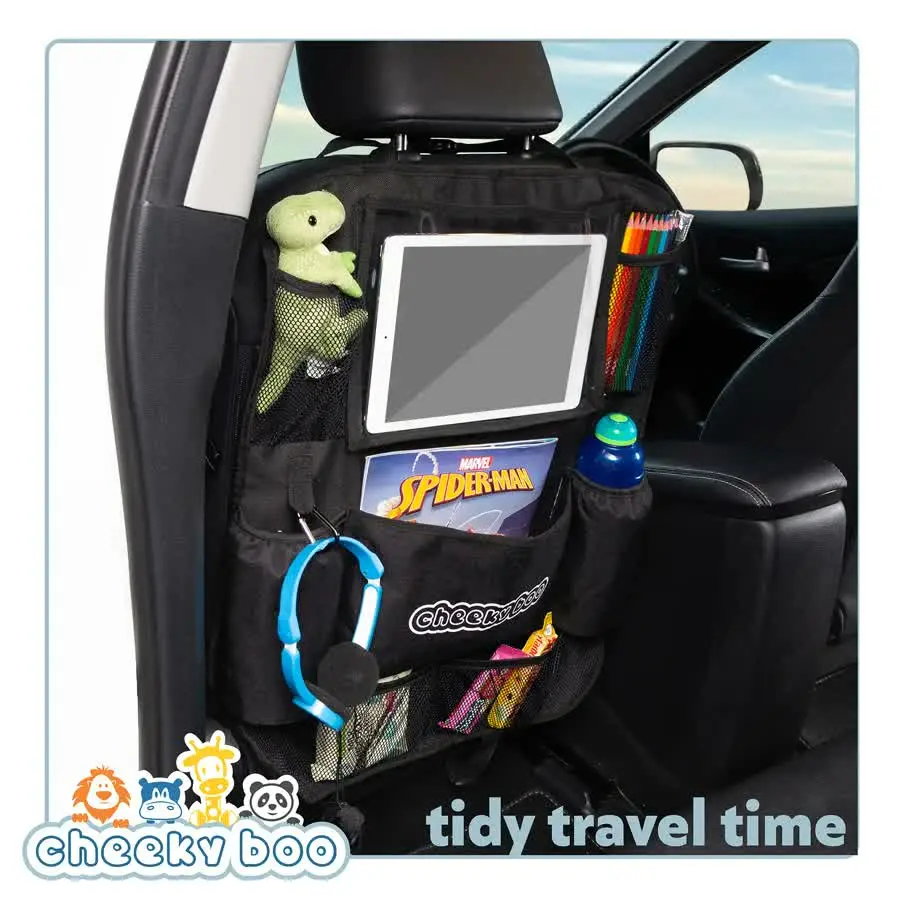
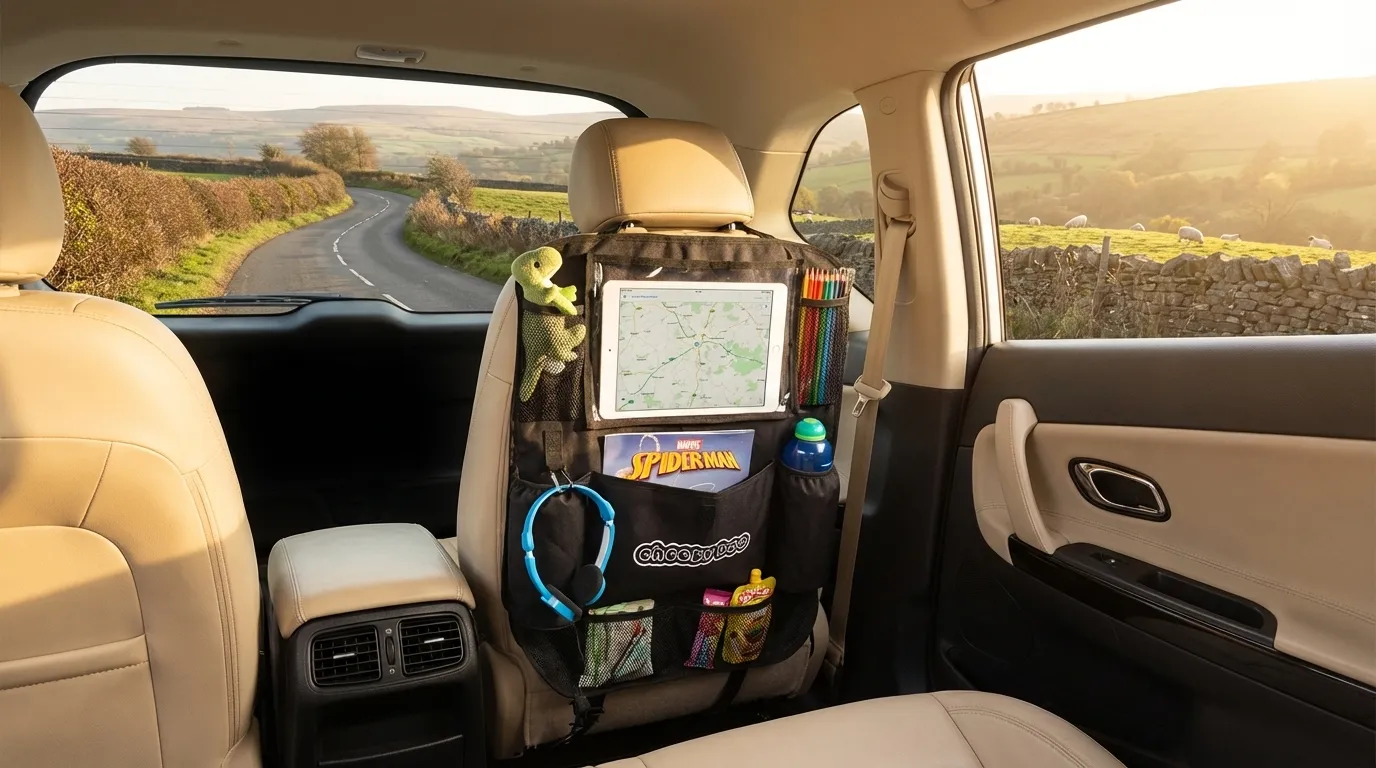
The CheekyBoo Car Seat Organiser is worth having fitted from day one of the holidays and leaving it in for the whole six weeks. Everything in its place, within reach, every journey. By week four you'll have it dialled in exactly right.
CheekyBoo Car Seat Organiser
Keep every journey comfortable for the children. Tablet pocket, insulated drinks holders, snack pockets and 8 compartments in total. Wipe-clean and fits all cars. Over 822 reviews from UK families.
Shop on Amazon UK →Weeks 5 and 6: Wind Down Gently
The final two weeks should be lighter. Save something for week five, a day out, a visit to family, a local event worth going to, but don't plan another big trip. Everyone needs to start mentally returning to normal life.
Week six is for finishing summer activities, a slow pace, and getting ready for September without the last few days feeling like a scramble. A relaxed week at home with a couple of easy days out is the right note to end on.