Car safety for toddlers is one area where the rules matter and the common mistakes are genuinely widespread. This is not about being alarmist — most journeys are uneventful — but about making sure the precautions you take are the right ones and not just the ones that feel right.
Here is an honest, practical guide to toddler car travel safety in the UK: the legal requirements, the guidance that goes beyond the law, and the most common mistakes worth knowing about.
The UK Legal Requirements
In the UK, children must use a child car seat until they are 12 years old or 135cm tall — whichever comes first. All car seats sold in the UK must meet minimum legal standards. The law sets a floor; it does not define best practice.
Rear-Facing: Longer Than Most Parents Realise
Current best practice guidance — backed by road safety organisations and paediatricians — recommends keeping children rear-facing for as long as possible. This is because rear-facing seats spread crash forces across a child's whole back, head, and neck; forward-facing seats concentrate forces on the harness straps at the shoulders, which is significantly less protective for small children.
Extended rear-facing seats are available in the UK that accommodate children up to around 25kg — which can be age 4-5 for many children. Moving to a forward-facing seat earlier than necessary (because the child looks too big, or finds it more interesting) is one of the most common preventable safety downgrades.
The Most Common Toddler Car Seat Mistakes
- Harness too loose — you should not be able to pinch harness webbing at the shoulder. At all. Ever.
- Bulky coat left on under the harness — a coat compresses on impact, creating dangerous slack. Remove coats before fastening; cover with a blanket if cold.
- Moving to the next seat stage too early — the seat your child outgrows is not the next one up; the seat they have not outgrown yet is still the right one.
- Second-hand seat with unknown history — car seats that have been in a crash may show no visible damage but be structurally compromised. Buy new or from someone you trust completely.
- Incorrect installation — check after every installation that the seat has minimal movement (less than 2.5cm at the belt path). ISOFIX seats are more foolproof but still need checking.
In the Journey: Keeping a Toddler Safe and Occupied
The safest car journey with a toddler is one where the driver is not distracted. The most common cause of driver distraction with toddlers in the car is needing to pass things back — dropped toys, water bottles, snacks, the tablet that has slipped. Setting up a car seat organiser that puts everything the child needs within their own reach eliminates most of that distraction before it happens.
💡 The most important thing: A correctly fitted, age-appropriate, properly installed car seat with a correctly tensioned harness and no bulky clothing underneath is the single most effective thing you can do for toddler car safety. Everything else — toys, screens, snacks — is secondary to getting that right on every journey.
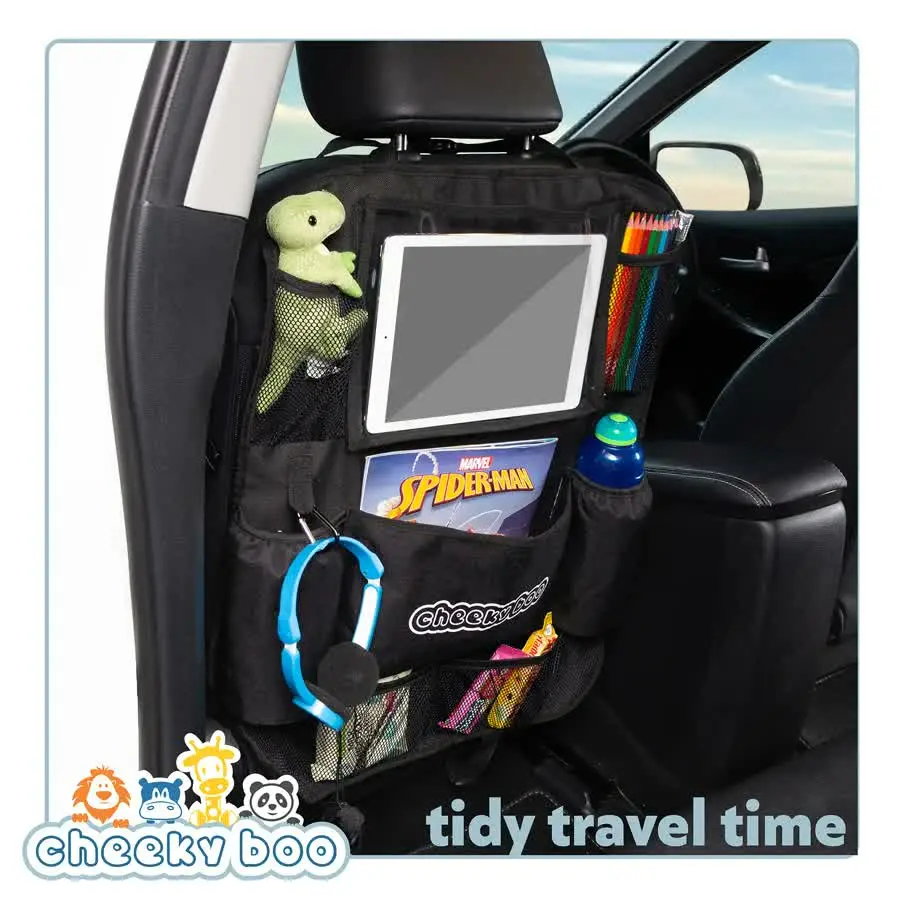
CheekyBoo Car Seat Organiser
Everything your toddler needs within their own reach — water, snacks, activities. Less reaching back, less distraction for the driver. 10,000+ UK families, 4.3 stars.
Shop on Amazon UK →