Long car journeys with a baby are entirely doable. They require more planning than travelling with older children, but they are not the ordeal many first-time parents expect. The key is timing and preparation — get those two things right and most long drives with an infant go smoothly.
Here is everything worth knowing, from the 2-hour rule to what to pack and how to structure the journey.
The 2-Hour Rule
Current NHS and road safety guidance recommends that babies should not spend more than 2 continuous hours in a car seat. This is not about the total journey length — it is about continuous time in the seat. On longer journeys, plan a proper stop every 2 hours where the baby is taken out, moved around, and allowed to stretch. A 5-hour drive means at least two stops, and that is fine. Build them into the plan from the start.
Timing the Journey
The most effective strategy for long car journeys with babies is to time your departure around a feed and then drive through a natural sleep window. A well-fed, settled baby who falls asleep in the car can give you 1.5 to 2 hours of driving. Many families find that this simple approach turns an otherwise stressful journey into a manageable one.
For longer trips, some families travel overnight or at very early morning. Babies often sleep through the bulk of a journey timed this way, and you arrive before the destination gets busy. It is tiring for adults but significantly easier than a daytime journey with a wakeful infant.
What to Pack
Nappies and changing
- Pack at least double the nappies you expect to use — journeys take longer than planned
- Wipes, nappy bags, and a portable changing mat
- Two changes of clothes for the baby (minimum)
- A muslin or two for feeds and spills
Feeding
- If formula-feeding: pre-measured powder in a dispenser, a flask of freshly boiled water, and bottles ready to mix at stops
- If breastfeeding: plan your stop locations around somewhere comfortable to feed
- For weaning babies: easy finger foods or pouches rather than anything requiring preparation
Comfort and safety
- Comfort toy or small blanket clipped to or near the seat
- Car seat mirror if your baby is rear-facing — being able to see them matters
- Sun shade for side windows — autumn sun can still be surprisingly bright at low angles
- Temperature check: babies cannot regulate temperature as well as adults; the car should not be too warm
💡 The parent's side: Put everything you need to reach during the journey — your water, snacks, phone holder — within arm's reach from the front seat. A car seat organiser on the front passenger headrest keeps the adult's essentials organised. The less you have to rummage for while driving, the better.
At the Stop
A good stop with a baby takes 20-30 minutes. Change the nappy first, then feed, then allow some time on a blanket or mat out of the seat if the weather allows. Resist the urge to rush back to the car — a proper break reduces the chance of the baby being unsettled for the next leg. Services with a family room or quiet area for feeds are worth seeking out.
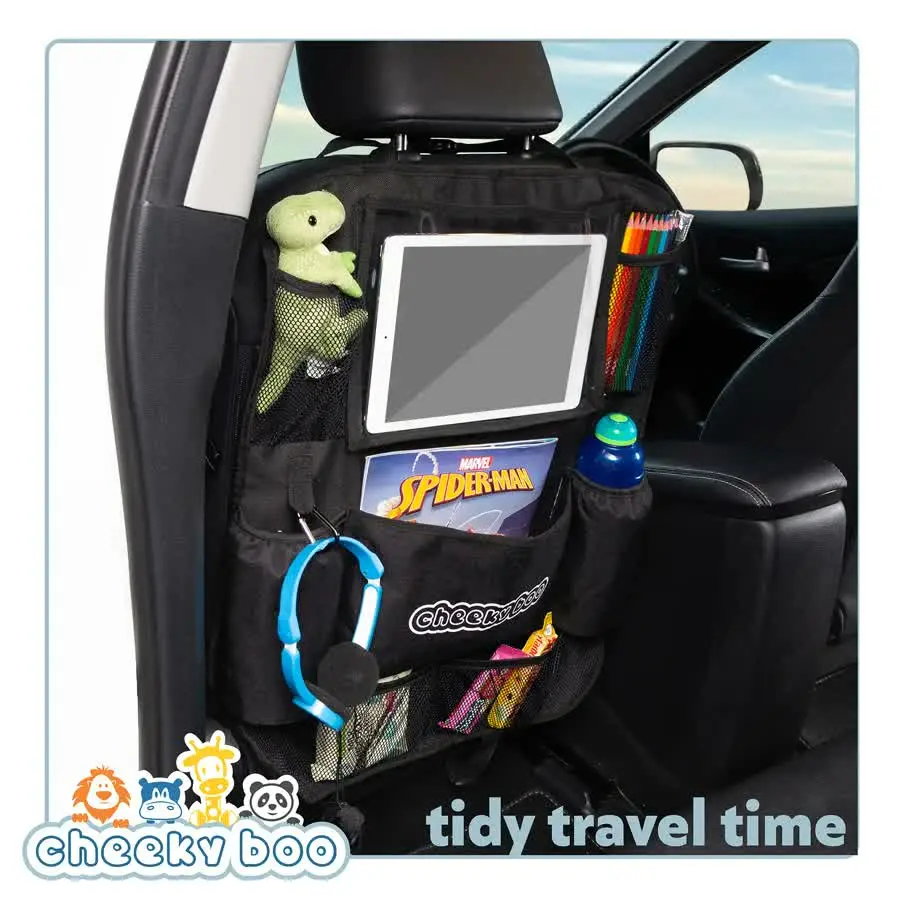
CheekyBoo Car Seat Organiser
Keeps everything the front-seat adult needs accessible without reaching back or rummaging in bags. Trusted by 10,000+ UK families. 4.3 stars, free Prime delivery.
Shop on Amazon UK →