Packing the family car for a long journey is one of those things that looks simple on paper and gets complicated very quickly. How do you fit everything in? Where does the pushchair go? Why can no one find the wipes? And why does the back seat always end up looking like a jumble sale 40 minutes after you've left the driveway?
The answer, in most cases, is that the packing didn't have a clear system. Here's the one that works for most families, from the boot to the back seat.
Start with the Boot vs Cabin Split
Before you load a single bag, decide what zone everything belongs in. This one decision prevents most of the chaos that follows.
The boot rule: anything you won't need until you arrive goes in the boot. Luggage, outdoor kit, pushchairs, car seats you're not using, shopping for the destination, things you'll unpack at the other end. Once it's in the boot, it stays there.
The cabin rule: anything a child might need during the drive stays in the cabin. This list is usually shorter than parents think. It doesn't need to include the entire contents of a bedroom.
What to Keep in the Cabin
Think 90 minutes at a time. What will you genuinely need before the next stop? That's what belongs within reach.
Entertainment
- Tablet or device, fully charged, with downloads already queued
- Headphones (one per child; sharing doesn't work)
- One or two small activity books or colouring pads
- Any audiobooks or playlists cued up on your phone
Food and Drink
- Snacks in individual portions, not one big bag
- Drinks in sealed, non-spill bottles or cups
- Wipes: at least double what you think you'll need
- Napkins or a small cloth for spills
Comfort and Safety
- One change of clothes per child, in a separate easy-access bag
- Any comfort toys or blankets
- Small first aid kit within reach (not buried in the boot)
- Sunscreen in summer (cars heat up faster than you expect)
📦 The back seat organiser principle: The problem most families run into is that cabin items end up loose on the back seat or stuffed into a bag that falls over and empties itself by junction 4. The CheekyBoo Car Seat Organiser fixes this by giving everything a fixed, dedicated space. It hangs from the front seat headrest, keeping tablets, drinks, snacks, and smaller items in organised pockets right at child height. Nothing rolls under the seat. Nothing gets lost. Parents tell us this is the single most effective thing they've done for long journey peace.
How to Load the Boot Efficiently
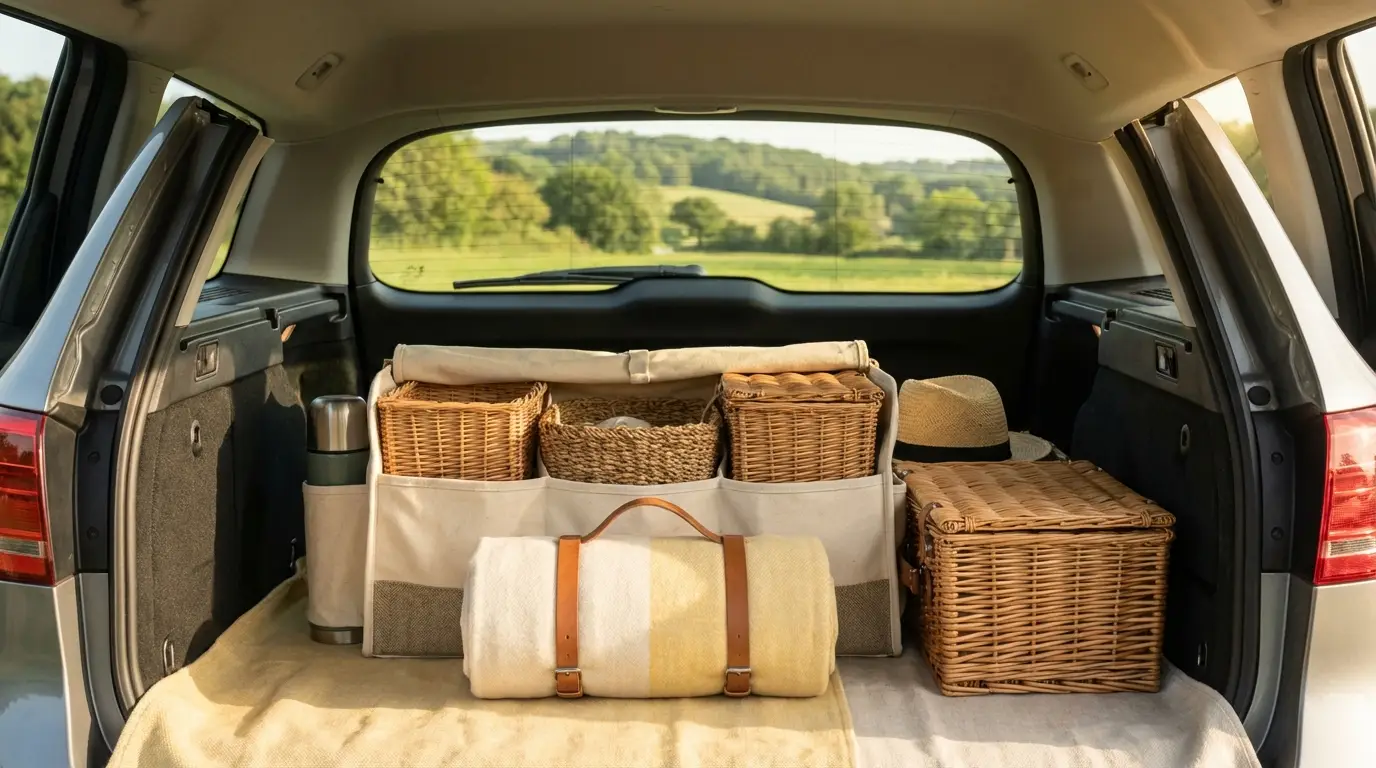
Boot packing is its own skill. The main principle is weight at the bottom, awkward shapes at the back, and anything you might need at a stop (wellies, a rain jacket, the pushchair) packed last so it's on top and accessible.
- Heaviest bags flat at the bottom of the boot
- Soft bags and clothing on top — these fill gaps and stay put
- Anything needed at stops (outdoor gear, wellies) on top or to the side
- Fragile items wedged between soft bags so they can't shift
- A large tote or bag of duty for things picked up during the journey
If you're travelling with a pushchair, load it after everything else. Most fold small enough to stand upright against the side of the boot.
The Back Seat Setup
This is where most family car packing falls apart. The boot is done. The front seats are sorted. And then the back seat gets everything that didn't fit anywhere else, plus three bags of things the children "absolutely need" for the journey.
The most effective back seat setup is one where each child has their own organised zone. If you have two children, they each have their own space and their own organiser. If you have one child, they have everything within arm's reach on the seat back in front of them.
The CheekyBoo Car Seat Organiser creates that zone. It hangs off the headrest of the front passenger seat and gives your child a tablet pocket (sized for up to a 10.1" tablet with a touchscreen-compatible window), insulated drinks holders, and multiple smaller pockets for snacks, wipes, and activities. Everything within reach, nothing on the floor.
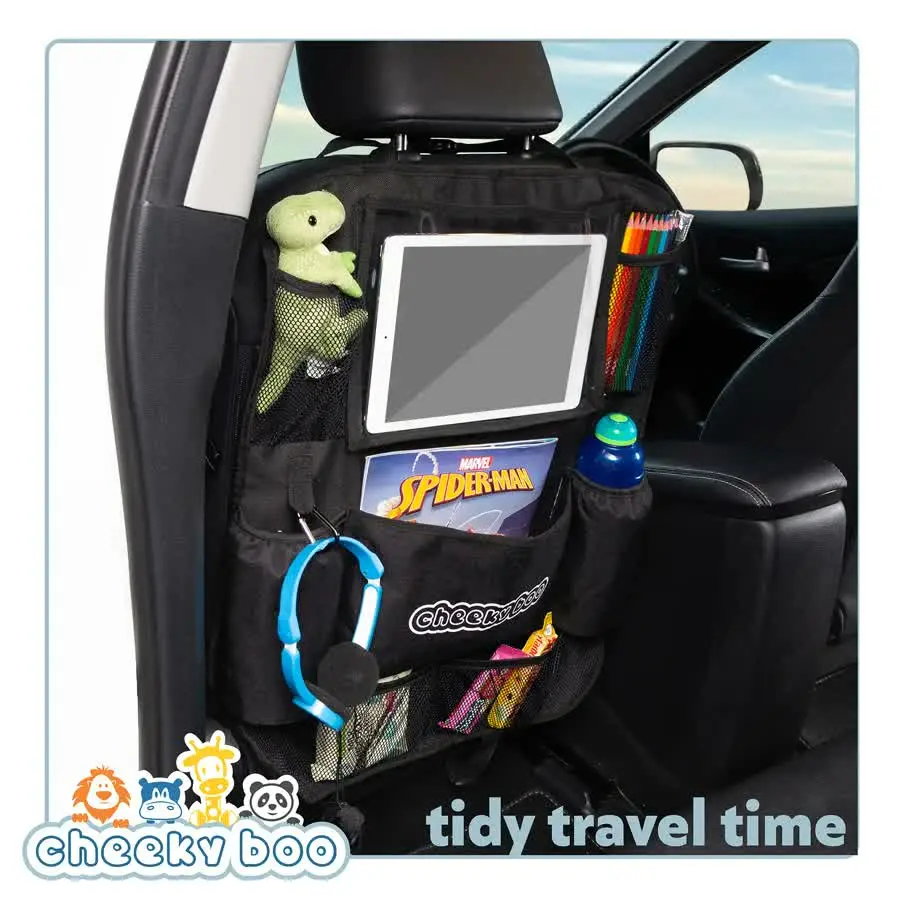
CheekyBoo Car Seat Organiser
8 pockets including a 10.1" tablet pocket, insulated drinks holders, and snack compartments. Fits all car seats. Wipe-clean. 822 reviews, 4.3 stars. £16.99 on Amazon.
Shop on Amazon UK →The Pre-Departure Checklist
Worth doing the night before, not at 6am when you're trying to leave:
- Tablets charged, downloads queued
- Snacks and drinks packed and portioned
- Boot packed and accessible items on top
- Car seat organiser fitted and stocked
- Spare clothes in an accessible bag in the cabin
- Sat nav or maps ready with your route loaded
- Stops planned at roughly 90-minute intervals
The families who find long journeys manageable are almost always the ones who do this preparation the evening before. The ones who pack in the morning usually forget something, load the car in the wrong order, and leave 45 minutes later than planned.