Winter driving with children is not dramatically different from summer driving, but the margin for error is smaller. Roads are slower, delays are more likely, and a child who gets cold quickly becomes a very unhappy passenger. With a bit of thought before you set off, most winter journeys are entirely manageable.
Here is what to think about, from car seat safety on cold mornings to what to keep in the cabin when things go wrong.
The Coat Issue: What Every Parent Should Know
This is the one that catches people out. In cold weather, the natural instinct is to wrap children in their warmest coat before strapping them into the car seat. The problem is that bulky coats, thick snowsuits, and padded jackets compress on impact. On a normal journey the coat feels perfectly fine, but in a crash the harness has far more slack than it should, and the child can be thrown forward into the seat or impact zone.
The test is simple: put the coat on, fasten the harness as you normally would, then take the coat off without loosening the straps. If you can pull the harness away from the chest by more than two fingers, the coat is too bulky to wear under the harness.
What to do instead:
- Layer thin fleeces or thermal underlayers, which are fine under a harness
- Fasten the harness correctly, then put the coat on backwards over the top
- Use a car seat-compatible cover or footmuff designed to work with the harness
- Let the car heater do the work once you are moving
De-Icing: Do It the Right Way
A de-icer spray and a proper scraper are all you need for most UK mornings. Clear all windows, not just a small porthole in the driver's line of sight. Driving with impaired visibility is an offence and puts everyone at risk.
The temptation to leave the car running while you pop back inside to finish breakfast is understandable, but it comes with real risks. An unattended vehicle with the engine running on a public road is an offence under the Road Traffic Act, and leaving children unattended in a running car creates its own safety concerns. The practical answer is to keep the children inside until the car is ready, then do the journey in proper warm layers rather than snowsuits.
Hot water on a frozen windscreen is also worth avoiding. The rapid temperature change can crack the glass. Cold water works, or better still, use the spray.
🧊 Quick check before a cold-weather journey: Tyres (including spare), lights, windscreen washer fluid topped up with a winter mix, and at least half a tank of fuel. If you break down in cold weather, fuel is warmth.
What to Keep in the Cabin
The cabin is where your children will be sitting, so treat it as a comfort zone, not just a transport space. In winter, a few extras make a real difference.
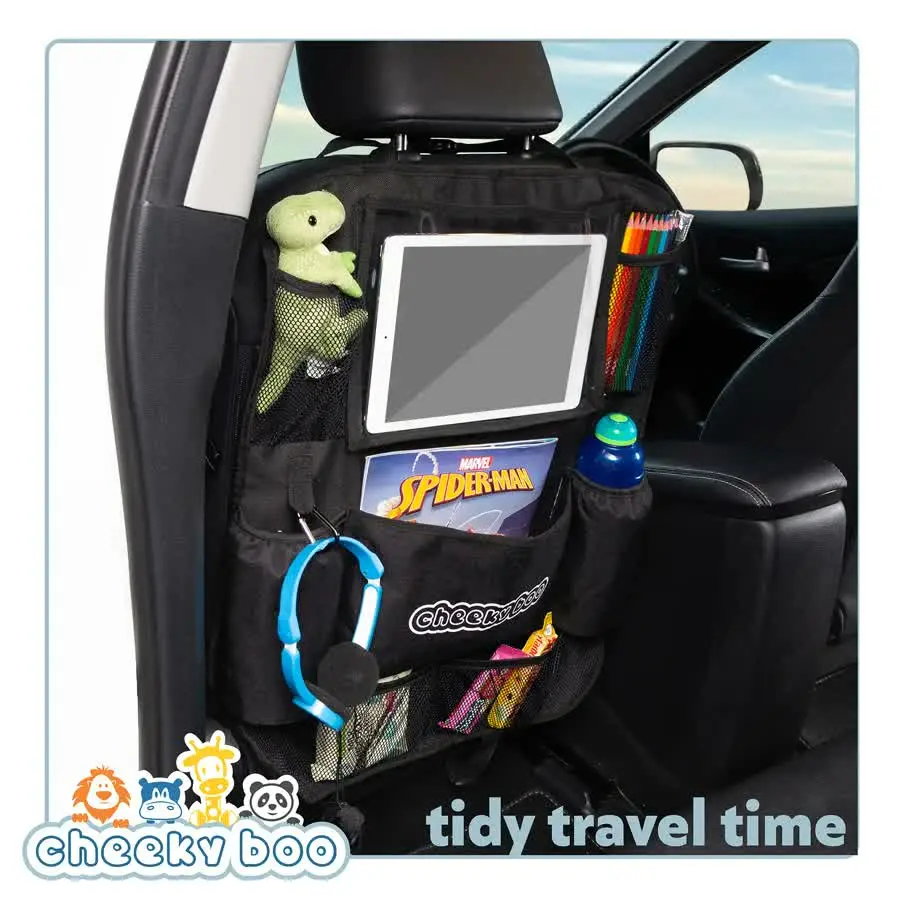
A CheekyBoo Car Seat Organiser keeps warm drinks in insulated holders within reach of the children, alongside snacks, wipes, and a small blanket folded into the main pocket. On a cold journey, having drinks that stay warm and snacks that stay accessible without anyone diving into the boot means everyone stays calmer.
Keep a lightweight fleece blanket in the car during winter. It takes up almost no space, but if you are stuck in a queue or waiting for recovery to arrive, it is genuinely useful. For very young children, a blanket over the lap (not under the harness) is safe and keeps the chill off.
If You Break Down
Breakdowns in winter with children in the car feel much more stressful than they are. Get safely off the road if you can, put hazard lights on, and keep everyone in the car away from the carriageway side. If you are on a motorway, exit through the passenger door and wait behind the barrier.
A basic winter emergency kit is worth keeping in the boot year-round:
- Warm blanket for each child
- High-visibility vest for adults
- Torch and spare batteries
- Phone charger or power bank
- Water and a small snack supply
- First aid kit
- Breakdown cover details easily accessible
Keeping Everyone Comfortable on Long Winter Drives
Long winter journeys and short winter days make for a lot of driving in the dark. Children who are warm and have their things within reach are far more settled than children who are cold and bored. Keep the car at a reasonable temperature rather than blasting the heater, as an overheated cabin can make children sleepy and adults drowsy behind the wheel.
Regular stops matter more in winter. Getting out, stretching legs, and taking a few minutes at a service station makes a long journey more manageable for everyone, including the driver.
CheekyBoo Car Seat Organiser
Insulated drinks holders keep warm drinks warm in cold weather. 8 pockets for snacks, wipes, and everything else within the children's reach. £16.99, free Prime delivery.
Shop on Amazon UK →